“Porcelain dental aesthetics is not merely about creating beautiful teeth. Its ultimate goal is to create a beautiful smile a beauty that is refined and natural. Above all, that beauty must be long-lasting and truly safe.” – Dr. Dang Hoang Cuong, Specialist Level I”.
With more than 13 years of experience in cosmetic dentistry and as a renowned expert in porcelain dental aesthetics in Ho Chi Minh City, Dr. Dang Hoang Cuong, Specialist Level I shares his professional insights into this treatment from two perspectives: Aesthetics and Clinical Dentistry.
A porcelain dental restoration, from an aesthetic perspective, must satisfy the following principle:
“Four elements, including (1) the dental arch, (2) tooth shape, (3) the size of each tooth, and (4) tooth color, must possess aesthetic refinement and natural beauty. At the same time, they must harmonize with other facial structures, including the gums, mouth shape, facial features, and skin tone, so that the final result is not only beautiful teeth but also a naturally attractive and captivating smile.”
To achieve this, a porcelain restoration case must meet the following requirements:
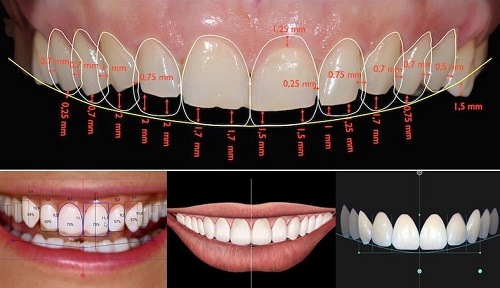
(Porcelain smile design analysis – Image provided by Peace Dentistry, Ho Chi Minh City)(**)
The dental arch must be compatible with the jaw arch, harmonious between the upper and lower dental arches, and proportionate to other facial structures such as the nose and chin, the beginning and end points of the eyebrows, the inner and outer corners of the eyes, and the nasal bridge.

(When the dental arch is harmonious with the jaw arch, gum line, and mouth shape, the teeth and smile will appear beautiful whether at rest, during a gentle smile, or a broad smile)(**)
A cosmetic porcelain restoration can be considered aesthetically unsuccessful if it exhibits any of the following characteristics:
A beautiful smile requires more than aligned, white, and evenly colored teeth. It must also possess refinement and naturalness in its contours and details. Most importantly, the tooth color should have natural optical translucency. In cosmetic dentistry, achieving a natural appearance is one of the most important factors.
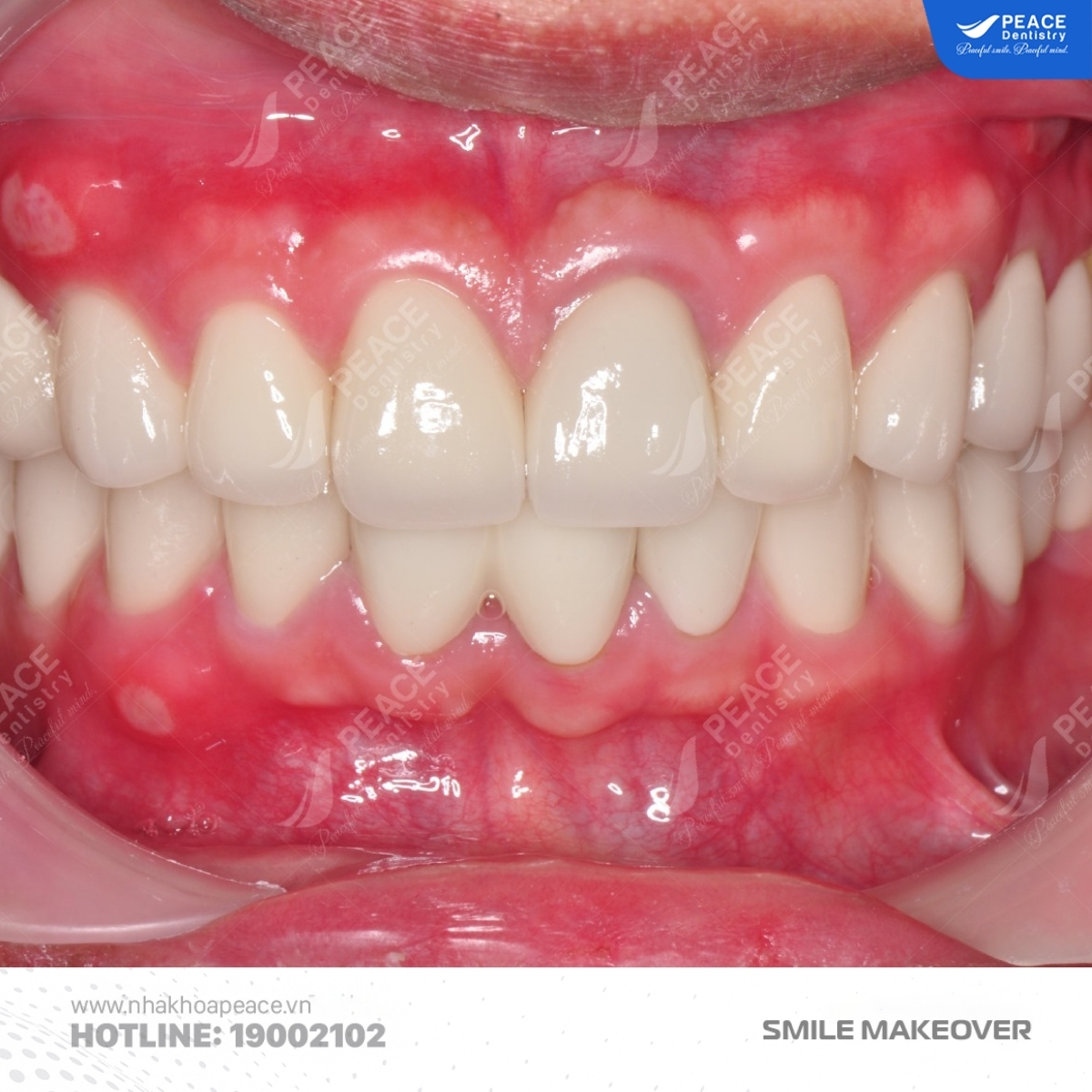
(The dental arch, tooth shape, contours, and tooth color must be beautiful while maintaining a natural appearance)(**)
Factors such as the shape of the mouth, lip color and thickness, facial structure, skin tone, and even personality all influence what dental arch, tooth shape, contours, and tooth color will be considered most aesthetically pleasing.
Harmony between the teeth and these surrounding elements is what ultimately creates a beautiful smile.
“Porcelain dental aesthetics may be beautiful, but first and foremost it must provide good chewing function, safety, and long-term oral health. If the treatment compromises the longevity of the teeth or reduces chewing efficiency, it should be considered unsuccessful.”- Dr. Dang Hoang Cuong, Specialist Level I
To achieve these goals, a cosmetic porcelain restoration must satisfy the following four requirements:
Porcelain dental aesthetics may be indicated for the following cases:
Porcelain restorations may also be indicated as part of a smile makeover, including improvements in tooth color, tooth shape, and gum aesthetics.

(Some cases suitable for safe porcelain dental aesthetics – Image provided by Peace Dentistry, Ho Chi Minh City)(**)
There are two primary porcelain aesthetic treatments:
Porcelain veneers require only minimal reduction of the front surface of the tooth (approximately 0.5 mm) or, in some cases, almost no tooth preparation at all. Porcelain crowns generally require a greater amount of tooth reduction.
Depending on the individual case, the dentist will determine whether porcelain crowns or porcelain veneers are the most appropriate treatment option.

(When the teeth are relatively well aligned and there is no edge to edge bite relationship, veneers can preserve almost the entire natural tooth structure)(**)
Important Note: For younger patients or cases involving severe protrusion, severe underbite, or significant dental crowding, porcelain restorations alone should not be recommended. Instead, orthodontic treatment or a combination of orthodontics and porcelain restorations should be considered to preserve the long-term health, function, and longevity of the natural teeth.
Tooth preparation should be performed conservatively to preserve as much natural tooth structure as possible. The preparation process must also be safe and should not damage the gums.
Modern dental equipment should be used to ensure precise tooth preparation, shorten treatment time, and maximize patient comfort.

(Treat only the necessary number of teeth and preserve as much natural tooth structure as possible to maintain long-term oral health)(**)

(Porcelain materials that meet international standards, include warranty coverage, and provide global IDPI authentication help ensure long term aesthetic success)(**)

(Dental Aesthetics Expert – Dr. Dang Hoang Cuong, Specialist Level I)(**)
“For a dentist, professional expertise is essential. However, without genuine care and dedication, expertise alone becomes meaningless. Compassion allows us to understand our patients, empathize with their concerns, and determine what is truly best for them.
Porcelain dental aesthetics should certainly be beautiful, but beauty must always go hand in hand with safety and long-term success.
Therefore, when making any decision regarding your teeth, never take it lightly. Instead, take the time to carefully research and choose dentists and dental clinics that are not only highly skilled but, more importantly, genuinely dedicated to their patients.”- Dr. Dang Hoang Cuong, Specialist Level I